
Image credit: Derek Keats / Pexels
Get to Know Our Researchers
At Earth Species Project, we’re working to develop general-purpose models that can be applied across taxa and address a range of research questions that biologists want to ask. Our Foundations team is at the forefront of this work. Their research spans the development of new model architectures, training methods, and benchmarks, as well as investigating what models actually learn about animal vocalizations. The models and insights generated through this work then inform our Decode projects, where we investigate the communication systems of particular species.
In our first researcher spotlight, we introduced the Postdoctoral Researchers on our Decode team. This time, we’re excited to introduce three Postdoctoral Researchers on our Foundations team: Dr. Eklavya Sarkar, Dr. Jules Cauzinille, and Lukas Rauch. Each brings a different background and perspective to the challenge of developing models that deepen our understanding of that natural world.

Dr. Eklavya Sarkar
Given that humans and animals both vocally communicate through inherently structured and rich acoustic signals, Eklavya’s PhD thesis at EPFL investigated whether representations learned from human speech, in a self-supervised framework and without prior knowledge, could be leveraged for decoding non-human animal vocalizations.
This was the first work to apply pre-trained self-supervised speech models to animal vocalizations for caller detection. It formulated a proof-of-concept study, and demonstrated the core hypothesis that the utility of representations learned from human speech is not limited to modeling human speech alone.
The order in which sounds occur within animal vocalizations can carry important communicative information, yet this information is often lost in computational analyses. Eklavya’s paper investigated whether discrete acoustic token sequences could effectively capture and leverage temporal information, and hold promise as alternative feature representations for animal vocalizations.
Eklavya is currently a postdoctoral researcher at ESP who previously worked on representation learning for bioacoustics during his PhD at Idiap Research Institute and Ecole Polytechnique fédérale de Lausanne (EPFL), Switzerland. Coming from a computer and data science background, he is not only passionate about understanding novel machine learning and deep learning techniques and advancements, but also applying and extending them to non-human animals.
How did you get into this field of work?
I was fortunate to be selected as a doctoral student and computational scientist in a prestigious transdisciplinary project by the Swiss National Foundation of Science called NCCR Evolving Language. Over the next four years, I got to expand my knowledge and skills beyond machine learning and engineering and learn about animal communication and the evolution of language by engaging and collaborating with fellow linguists, biologists, and neuroscientist researchers. I worked on various topics such as voice activity detection, zero-resource language scenarios, acoustic sub-word units, as well as animal language understanding i.e. bioacoustics.
What are your research interests?
I’m particularly interested in representation learning, which is about teaching models to capture meaningful features in data. I’m curious about what makes a learned representation useful: what information it preserves, what it overlooks, and whether it generalizes to new settings. My research consists of applying the same idea from humans to non-human animal vocalizations.
What piece of work are you most proud of?
I’m really proud of having been part of the research community who pushed and shaped the initial field of computational bioacoustics as it was growing. Early on there was very little existing machine learning literature on this niche topic to guide you, and starting a PhD on it in 2021 really felt like shooting an arrow in the dark. However, watching the field grow over the next few years as everyone ‘decoded’ it slowly, while contributing my own research efforts and seeing others build on it, was very rewarding.
What are you most excited to work on next?
I’m curious to see how this field can move beyond analyzing and understanding animal communication through a purely acoustic lens, and leverage other areas such as gaze following or reinforcement learning, to open up new and exciting ways to decode animal communication.
If you could be one animal, which would you be and why?
It would be cool to be a T. rex in the Cretaceous era! But otherwise I would choose an animal far from humans on the phylogenetic tree, such as a lobster or jellyfish. Octopuses, in particular, possess remarkable abilities such as shape-shifting, camouflage, and limb regeneration, and exhibit sophisticated cognitive abilities. It would be very fascinating to experience the world through such a radically different form of life.
Dr. Jules Cauzinille
During his PhD, Jules observed that deep learning models process speech and animal sounds in surprisingly similar ways. One hypothesis underlying this mechanism is that human and non-human communication evolved in parallel, responding to shared environmental pressures with analogous evolutionary answers.
Most primates engage in complex communication with their voices, but few experiments based on state of the art machine learning approaches have been developed to study them. Jules worked on reviewing such work, proposing general guidelines and new perspectives to advance the promising field of primate bioacoustics.
Gibbons often engage in territorial calls to signal their identity. Surprisingly, pre-trained speech models are better suited at recognizing their signature compared to bioacoustic models. Their advantage may lie in the vast amount of clean recordings they are trained on (and the fact that gibbons are our evolutionary cousins).
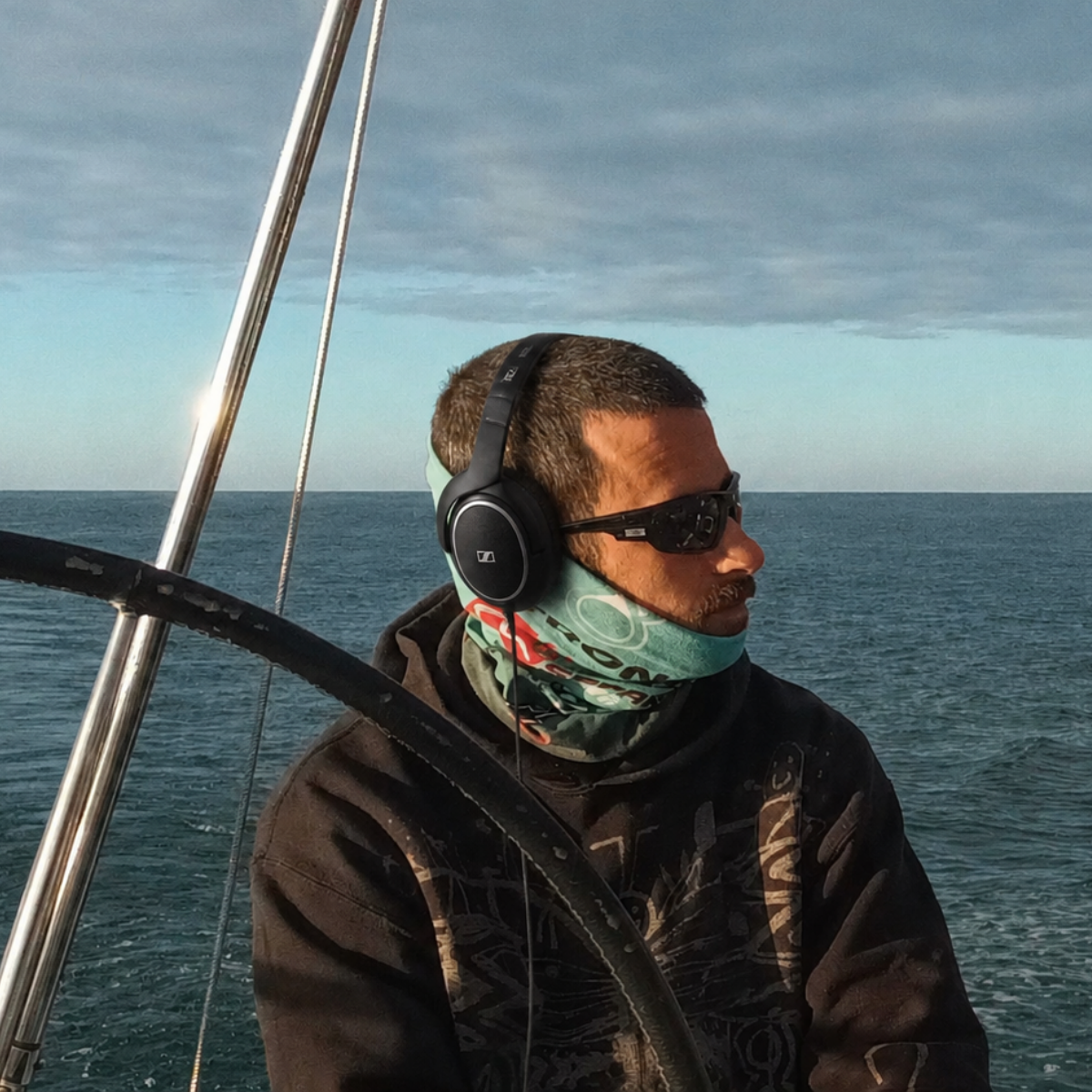
Jules is a postdoctoral researcher at ESP working at the intersection of linguistics, bioacoustics, and computer science. His research focuses on the evolution and convergence of animal communication systems across species. After a Ph.D. in computational bioacoustics around deep transfer learning from human speech to animal sounds, he now works on modeling the structure of animal vocal sequences. Jules’ broader interest lies in the evolution of natural sound and how computers might help us listen beyond the limits of human perception.
How did you get into this field of work?
I was always frustrated by the fact that my studies in linguistics and speech science focused exclusively on humans, given my longstanding fascination with evolutionary theories and the origins of language. After my Master’s, I decided to be strategic about it: applying the speech processing tools I was familiar with to a field I knew very little about at the time (non-human primate communication) and building expertise along the way. I then expanded my research to other species and, before I knew it, I had fallen down the animal communication rabbit hole.
What are your research interests?
I see myself as having two sides. My Master’s and PhD are primarily in computer science, but my research interests lie in natural sounds, animal communication theory and its evolution across species. I’m fascinated by convergent evolution, that leads very different species to come up with similar ways of exchanging information, and also by the diversity of ecosystems, where each species finds their own niche among countless possible communication strategies. At a more practical level, I’m interested in what computational models can reveal about non-human communication, and how they might help us move beyond human-centred understanding.
What piece of work are you most proud of?
Ultimately, I am very proud of my thesis manuscript. I was very fortunate to be supervised and surrounded by very supportive people throughout my PhD, and I decided to invest time and energy into turning my manuscript into a didactic piece, combining accessible background and context, with technical and specialized analyses, as well as epistemological reflections on what studying animal communication entails, and how using AI to do so can both simplify and complicate the process.
I’m also proud of the papers I’ve co-authored. Being able to contribute my own small area of expertise to a broader collaborative effort is always a rewarding experience.
What are you most excited to work on next?
I am mostly excited about the side projects. Going back to the field to record pilot whales in the Atlantic ocean, because meeting your research subjects is an exciting prospect. I am also looking forward to organizing a new workshop next year at the intersection of music science and bioacoustics, to bring these two scientific communities together and foster new ideas. Finally, I’m always excited to start working on a new species. Each time, you get to discover a whole new world of sounds, habitats, functions and life-styles.
If you could be one animal, which would you be and why?
I would definitely want to be a big filter feeder, such as a baleen whale, just drifting around, singing and dancing. I like that the biggest animal in the world survives on one of the smallest (they predominantly eat krill). I like that when you speed up their very slow and low-frequency songs by more than 10 times, they suddenly sound like tiny songbirds, that they also have dialects and that, in some species, their songs evolve culturally in time like language does in human societies. I also like that we are still so far from understanding any of what they seem to be talking about.

Lukas Rauch
Lukas created BirdSet, a large, openly available benchmark of bird vocalizations from nearly 10,000 species. It gave the field a common reference point and has become a widely used benchmark in avian bioacoustics and beyond.
This work showed that general-purpose audio models miss the fine detail needed to tell bird species apart. It introduced Bird-MAE and prototypical probing, a lightweight method for frozen feature utilization that gets close to full fine-tuning performance.
Audio models are usually evaluated with expensive fine-tuning, because simple probes on frozen models seem to perform poorly. Lukas showed that the problem is how information gets pooled: squeezing a recording into one summary can lose the localized sounds that matter. His advanced lightweight prototype-based probes fix this, making probing a competitive and efficient way to evaluate general-purpose audio models.
Lukas builds deep learning models for animal sound. During his PhD he created BirdSet, a benchmark now widely used in avian bioacoustics. His research covers self-supervised learning for audio representations as well as interpretability, so that models can be understood rather than treated as black boxes. His broader aim is to establish bioacoustics as a frontier domain for deep learning while turning state-of-the-art methods into practical tools for conservation and monitoring.
How did you get into this field of work?
During my PhD, the DeepBirdDetect project came up and the task immediately caught my interest. Recognizing birds from their sounds turned out to be surprisingly close to the unstructured, sequential data I had worked with before in NLP, so it felt like a natural step. Once I was in the field, I grew to love it, and the rest is history.
What are your research interests?
I want to bring bioacoustics into the broader deep learning community, but also move the field forward. That means building better, more efficient models that borrow techniques from the fast-growing world of deep learning/LLMs and push them further. Ultimately, I want to really change how we can understand animals through their vocalizations.
What piece of work are you most proud of?
BirdSet. It’s easy to see it as “just a benchmark,” but for me it was the starting point for my bioacoustic research at the ICLR, and I hope it remains a foundation for evaluating models as the field keeps growing. Seeing other groups adopt it and build their own work on it has been incredibly rewarding.
What are you most excited to work on next?
Working with old and new colleagues on our next foundation model to push the frontier further. I want models that are efficient enough to use widely and that capture the finer details and tasks biologists actually care about. I also want to get them deployed in practice through collaborations.
If you could be one animal, which would you be and why?
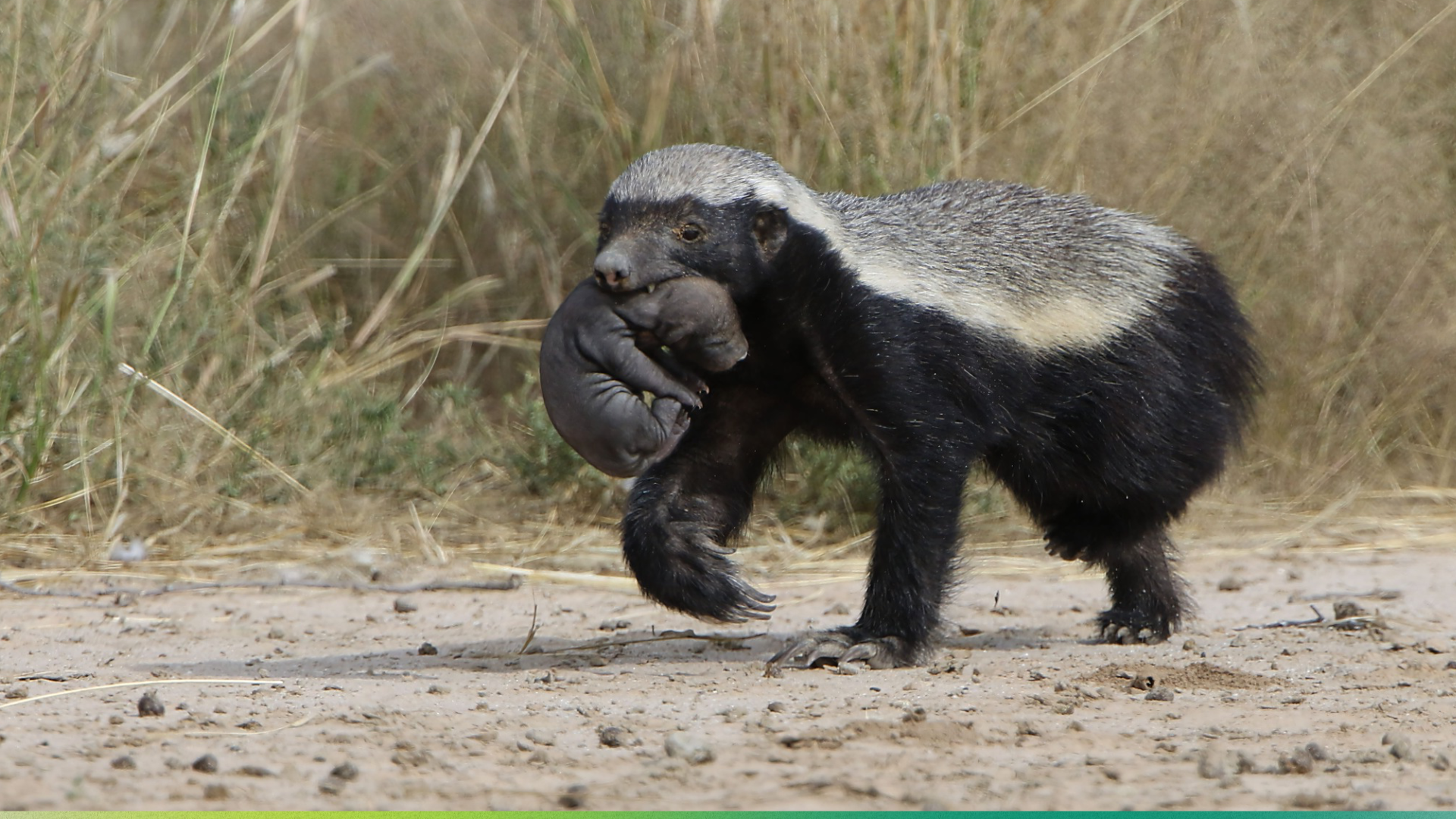
A honey badger. Nothing seems to scare them, and nothing seems to bother them either.