
Image credit: Francesco Ungaro / Pexels
Get to Know our Researchers
Animal communication research is changing quickly. New machine learning methods and growing bioacoustic datasets are giving researchers ways to study other species that weren’t possible even a few years ago.
Making the most of these advances requires more than better technology. It needs interdisciplinary talent from fields that have traditionally worked separately, combining expertise in areas such as machine learning, biology, linguistics, cognitive science, and animal behavior.
Growing this research community is an important part of our Theory of Change. Alongside developing new tools and methods to decode animal communication, we want to help build a field with the people and expertise needed to use them, test new ideas, and open up new areas of research.
Our Extended Research team is part of that effort. Our postdocs, interns, and research associates bring specialist expertise and new perspectives to our research, while helping us explore questions that span species and disciplines.
We’re excited to introduce some of the researchers contributing to this work. First, meet Dr. Logan James, Dr. Chiara Semenzin, and Dr. Inês De Almeida Nolasco, and learn more about the questions driving their research.
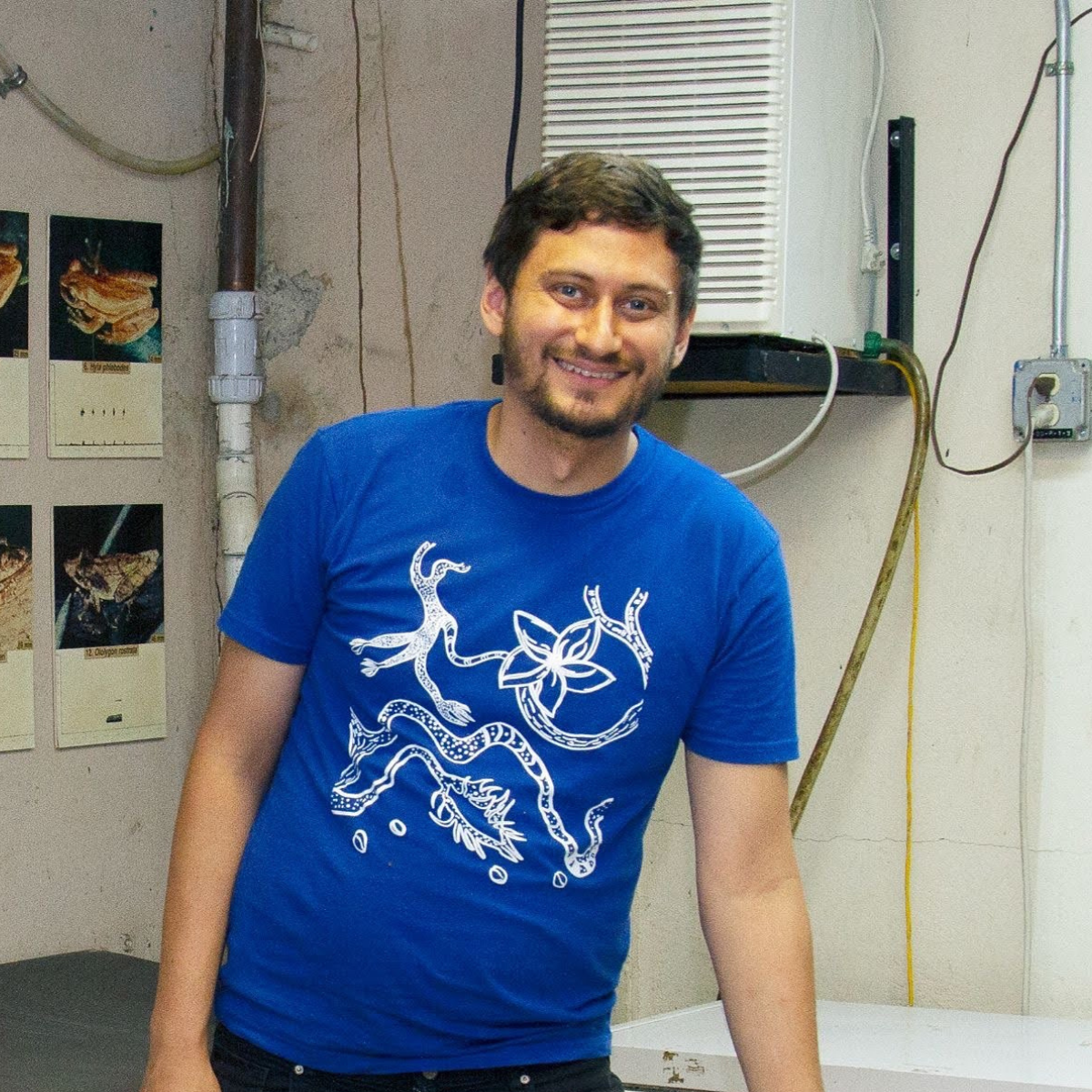
Dr. Logan James
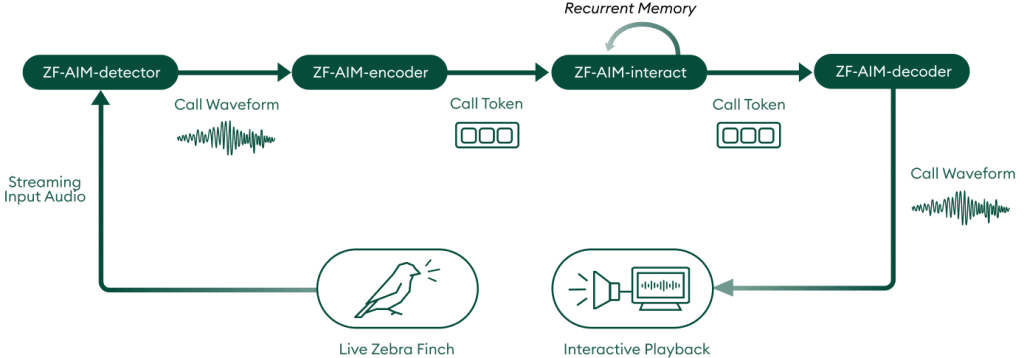
This preprint reveals that female zebra finches flexibly adjust the timing and acoustic structure of their calls during natural exchanges. It also introduces ZF-AIM, a generative audio model that can interact with live birds in real time, creating a new way to study animal communication through two-way exchanges.
This research found that humans often share other animals’ preferences for certain courtship sounds, including those produced by crickets, frogs, singing mice, and sparrows. This offers new insight into how different species perceive and respond to acoustic signals.
In a large tutoring experiment, Logan found that zebra finches have biases in song sequencing that parallel biases found in human vocalizations; and in a study looking at song sequencing in many different songbirds, he found biases towards hierarchical patterns that also mirror patterns found in human speech (“Menzerath’s law”).
Logan completed his Ph.D. in Biology at McGill University and has conducted postdoctoral fellowships at the University of Texas at Austin and the Smithsonian Tropical Research Institute, taking a comparative approach to acoustic communication including studies on birds, frogs, and bats. At Earth Species Project, Logan uses AI-driven acoustic models to study real-time vocal interactions, and hopes his cross-species work will reveal shared principles behind how animals, including humans, perceive and understand one another. Get to know Logan below!
How did you get into this field of work?
I have long been interested in animal behavior, and during university I discovered a strong passion for linguistics as well. Through my research, I have found that merging concepts from these fields can be very interesting and exciting (i.e., study animals like a linguist and study humans like a biologist).
What are your research interests?
Most generally, I am interested in comparing diverse communication systems of different species to understand the shared principles as well as how variation builds upon those common fundamentals. This often includes direct comparison with our own communication systems, with a goal of positioning human communication into a broader biological context.
What piece of work are you most proud of?
While I am very proud of many of my scientific publications and achievements, I think I am most proud of the communities that I have helped build throughout my career. For example, while doing fieldwork in Panama at the Smithsonian Tropical Research Institute, I am involved in important work regarding equity and diversity at field stations and facilitating access to peer support. At the same time, I’ve helped organize the weekly tradition of “frog talks” where folks give informal presentations about their on-going work (not limited to frogs) to spur discussions and help build networks of colleagues. Giving a talk in a crumbling concrete building along the Panama canal during sunset with my slides projected onto a bedsheet and a Balboa beer in one hand was fantastic, and the discussions following were some of the most thought-provoking I’ve ever had.
What are you most excited to work on next?
Through my work at ESP, we have developed an analytical framework for measuring animal interactions, and comparing how animals interact with playbacks that vary in complexity (from very simple playbacks, to more sophisticated interactive playbacks). I think there is a lot of potential for this framework to extend to other species and other types of interactions, and I am very excited to try that out and leverage my network of fantastic colleagues and collaborators to put together a large-scale comparison of animal interactions.
What piece of work are you most proud of?
I am proudest of the work that has been useful to other researchers and that has come from close collaborations with inspiring people. More recently, I am especially proud of our work on decoding embedding representations for bioacoustics here at ESP, as it represents a shift towards the kinds of questions I have wanted to explore for some time: understanding what AI models learn and how those representations can generate new biological insight.
If you could be one animal, what would you be and why?
Tough question – The bowerbird immediately comes to mind, with building an intricately decorated home and the ability to fly both sounding quite appealing!

Dr. Chiara Semenzin
Chiara and team found that bottlenose dolphins sometimes produce the signature whistles, or “names,” of their deceased mothers. The finding suggests dolphins may remember and refer to individuals long after they have died, offering a striking glimpse into their long-term memory and social bonds.
Dolph2Vec shows that self-supervised AI can uncover subtle, biologically meaningful patterns in dolphin vocalizations without relying on human-labelled data. This could help researchers investigate previously inaccessible questions and generate new hypotheses about animal communication.
Chiara’s research showed that citizen scientists can reliably classify young children’s vocalizations from daylong wearable recordings. The approach could make it easier to study language development at scale and identify early signs of language delay.
Chiara is a postdoctoral researcher at ESP, where her work brings together linguistics, machine learning, and biology. She builds computational and information-theoretic tools to probe the structure and meaning of animal communication, currently centering on dolphin acoustic communication. Trained in linguistics and cognitive science (MA and MSc, University of Edinburgh), she is fascinated by what happens when speech and representation models are stretched past the human voice and turned toward other species. Learn more about Chiara below!
How did you get into this field of work?
I started from a simple fascination with what makes human language unique. Trying to answer that question seriously forces you to ask the same thing about every other species, and then you’re hooked.
What are your research interests?
I’m interested in the rules underlying animal communication: how signals encode information, how they structure social life, and how societies are built and maintained through them. Answering those questions requires pulling together linguistics, biology, and computer science, and I find that methodological convergence as interesting as the biological questions themselves.
What piece of work are you most proud of?
Tracking the same dolphin population over six years and finding that individuals retain the signature whistles of their mothers long after those mothers have died. It’s a result I’m proud of, but what I love most is what it doesn’t answer: are they remembering? Referencing? Or does the signal itself change meaning after death? Scientific findings tend to do that, close one door and open three more.
What are you most excited to work on next?
Building foundational theoretical frameworks for animal communication that aren’t tied to a single species. Cross-species comparison is where the deep structural questions live, and I think the field is ready for that kind of synthesis.
If you could be one animal, what would you be and why?
Cuttlefish. They communicate through dynamic skin patterning: chromatophores firing in waves to produce a visual language of stripes and textures, and they can send different messages from different sides of the body simultaneously. As an acoustics researcher I find that it is genuinely disorienting in the best way: a communication channel that’s entirely inaccessible to me, using a sense I can barely conceptualize.
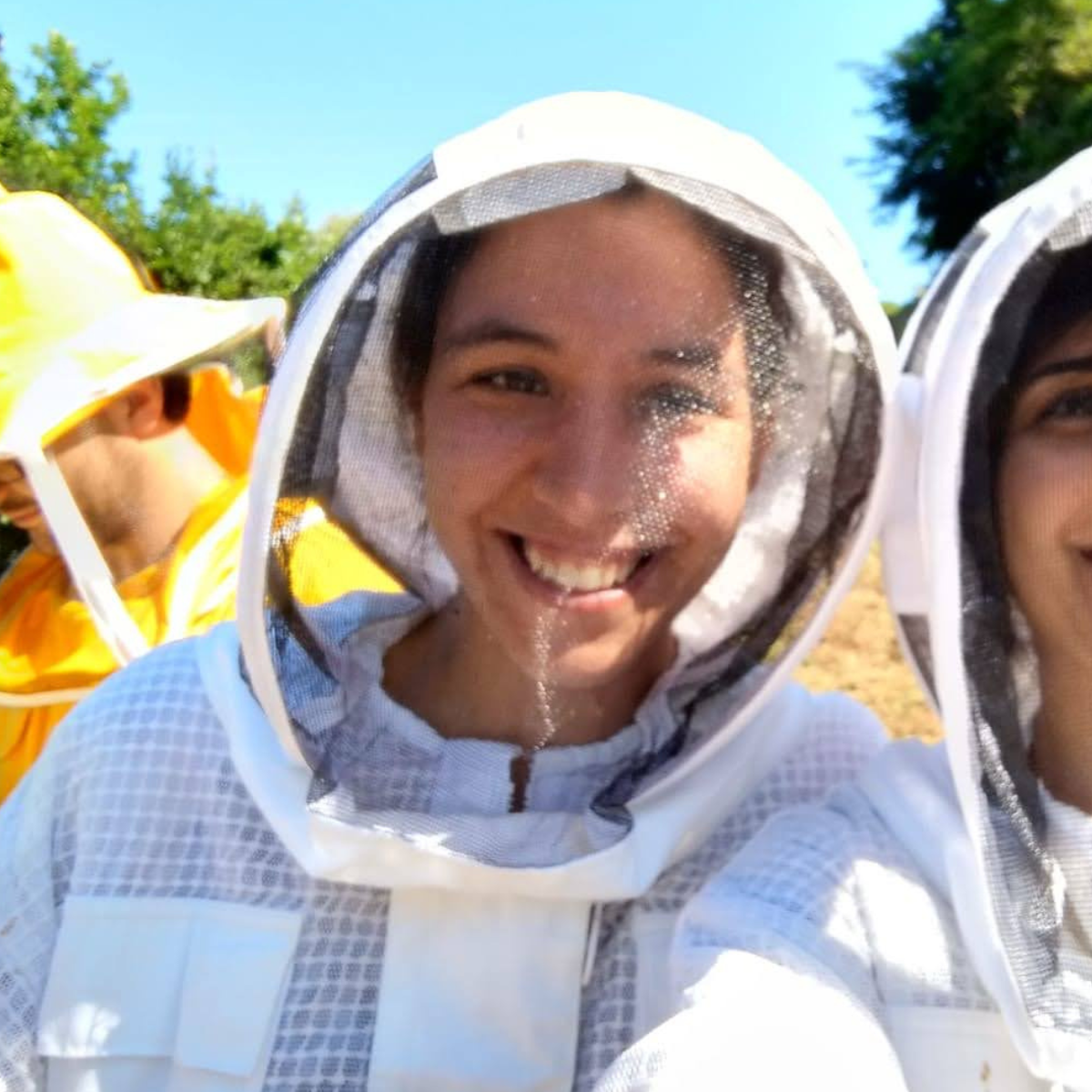
Dr. Inês De Almeida Nolasco
Inês developed machine learning methods to identify honey bee colony health and activity from acoustic recordings, demonstrating that hive sounds contain rich information about colony state. Her public dataset has since supported research in bioacoustics, precision beekeeping, and animal welfare.
This research combines model interpretability with domain expertise to understand how AI systems make decisions and enable them to generate biological insight, rather than simply optimise performance. It represents an important step towards using AI as a tool for scientific discovery.
Inês’ PhD developed methods to recognize individual animals from their vocalizations, reflecting her focus on understanding animals as individuals with unique traits. Identifying individuals from sound creates new opportunities to study their social behaviour and communication.
Inês is a postdoctoral researcher at ESP working at the intersection of animal communication, biology, and computer science. Her research focuses on AI interpretability and acoustic identification of individual animals. With a background in computer science and a longstanding love for animal behaviour, Ines is driven by a desire to better understand and foster greater respect for all forms of life on Earth. She is in constant awe of what she learns about the animals she studies. Get to know Inês below!
How did you get into this field of work?
I’ve always been interested in understanding other animals and why they do what they do. I come from a computational background, and while finishing my Master’s in Data Science I met researchers who were making sound recordings from inside beehives and were beginning to explore the information contained in those sounds. Machine learning provided a natural bridge between my technical background and my long-standing interest in animal behaviour.
What are your research interests?
I am interested in understanding how animals perceive the world, communicate, and interact with one another. My research combines machine learning with animal behaviour to ask questions that are difficult to answer using traditional methods.
A central theme of my work is understanding animals as individuals. Individual differences shape behaviour, communication, and social relationships, yet they can be overlooked in bioacoustics. I am interested both in developing computational methods that can recognise individuals from their vocalisations and in understanding why these individual vocal signatures exist, and how they have emerged.
Alongside this, I’m interested in the development of interpretable AI methods that help us understand not only whether models work, but what they have learned. I see explainable AI as a way of turning machine learning models into tools for biological discovery.
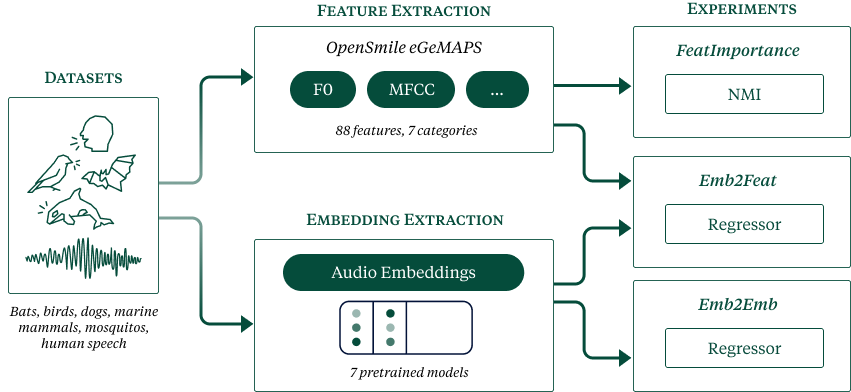
represented by which bioacoustic models in this paper.
What are you most excited to work on next?
Joining the Decode team at ESP has opened an exciting new chapter for me. I am excited to work on fundamental questions in animal communication while continuing to explore how individual differences shape behaviour. Ultimately, I hope to combine advances in AI with behavioural research to better understand how animals experience and interact with the world.
If you could be one animal, what would you be and why?
I don’t think I could choose just one. What I’d really like is to experience the world through different perceptual systems: I do wonder how it would feel like to be a whale, with a massive body that feels weightless underwater, or a bat that navigates entirely through sound. Understanding what it is like to experience the world as another animal is, ultimately, what motivates my research.