
Blog
-

From What to Who? AI Learns to Recognize Individual Animals
Understanding animal communication means knowing not just what species is calling, but who is speaking. Discover how researchers are using machine learning to recognize individual zebra finches in the wild, opening new ways to study their social lives and communication networks.
-
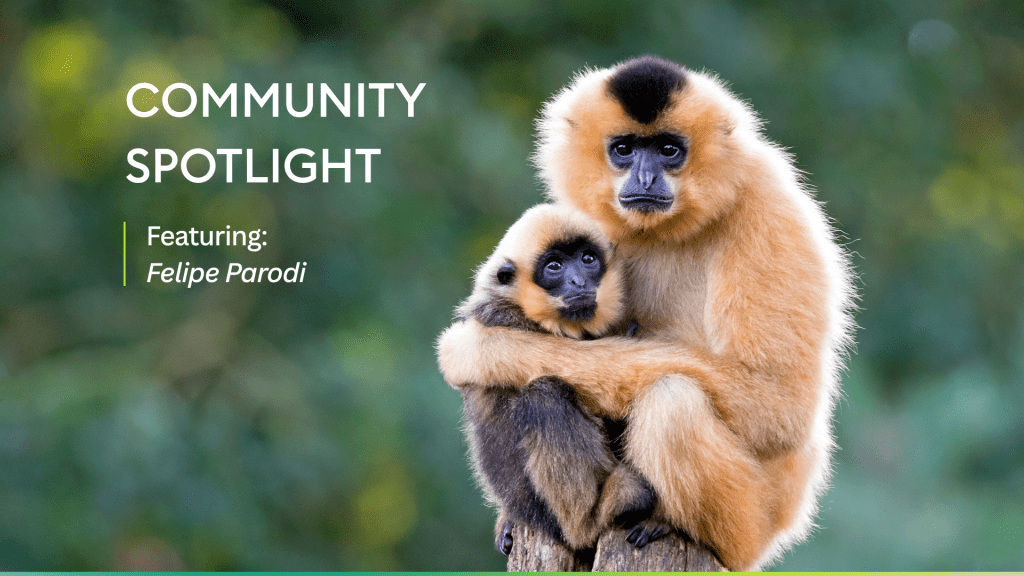
What Can a Primate Face Tell Us? A Scalable Approach to Studying Facial Expressions
A glance, lip-smack, or subtle shift in expression can reveal clues about a primate’s social world. Discover how PrimateFace is helping researchers analyze facial communication across species at a scale that was previously impossible.
-

Animal Language Processing: An AI Convergence in Animal Communication
We are starting to see the study of animal communication shift from narrowly defined, species-specific, and hypothesis-limited analyses toward data-driven discovery at scale. We refer to this convergence as Animal Language Processing (ALP), an approach that uses AI to study non-human communication at scale.
-

We’re Hiring! Director of Development
About Earth Species Project Earth Species Project (ESP) is a non-profit using frontier AI to decode animal communication. We believe the exponential progress we’re seeing in AI offers new ways of looking at the world and expanding the ability of human beings to learn from other species. Our hope is that this will make a…
-

Introducing Earth Species Project’s New CEO
Earth Species Project welcomes Steven VanRoekel as CEO. In this Q&A, Steve shares his vision for decoding animal communication with AI, his personal connection to wildlife, and what the next phase of growth looks like for ESP.
-

Unlocking Avian Secrets: How Tiny Biologgers Are Revealing the Hidden Communication of Carrion Crows
Lightweight biologgers and ESP’s machine learning tools reveal the hidden vocal world of wild carrion crows, capturing over 127,000 calls from quiet murmurs to long-distance signals.
-

What the World Thinks About AI and Animal Communication: Findings from Our First Global Survey
The first global survey on AI and animal communication reveals striking consensus: people worldwide recognize animals’ complex inner lives and demand technology that fosters connection, not exploitation.
-

What Matters for Bioacoustic Encoding: A Practical Training Recipe for Building Generalizable Models
To better understand what matters for building a generalizable bioacoustic encoder, we tested 19 models across 26 datasets and a new evaluation benchmark. Our main finding is that a two-stage training approach—self-supervised pre-training followed by supervised post-training, both on a mix of bioacoustic and general audio—delivers the strongest performance.
-
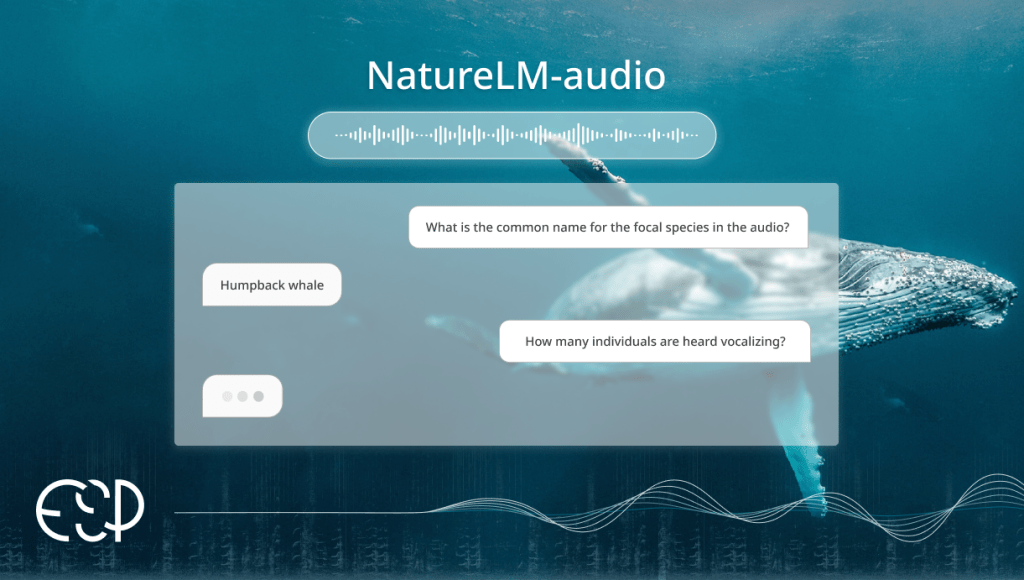
Hands-On with NatureLM-audio: A No-Code Demo
Explore NatureLM-audio, our open-source model for bioacoustics. Try the new demo to analyze animal sounds, identify species, and support research.
-
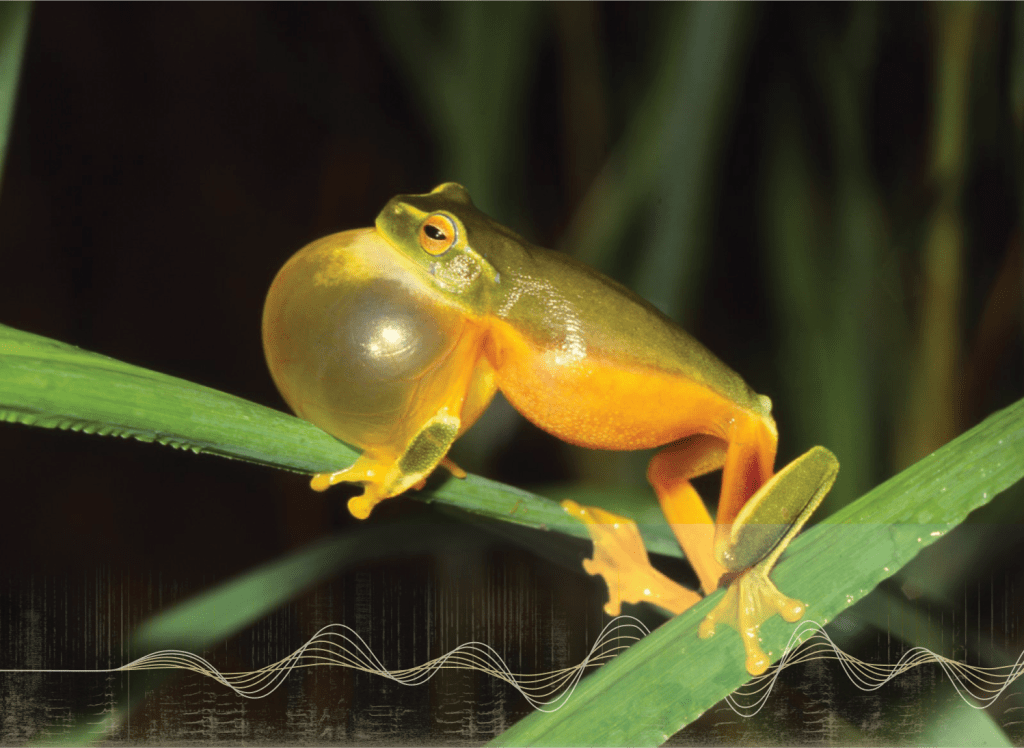
Listening for Frogs at Scale: How FrogID Evaluated NatureLM-Audio on Real-World Data
FrogID, the world’s largest frog-focused citizen science project, tested Earth Species Project’s open-source NatureLM-audio model to help automate the validation of frog vocalizations submitted by the general public. Without fine-tuning, the model excelled at distinguishing frogs from other sounds, potentially saving the team 300+ hours of manual work annually. It also showed strong accuracy on…