
Blog
-

Unlocking Avian Secrets: How Tiny Biologgers Are Revealing the Hidden Communication of Carrion Crows
Lightweight biologgers and ESP’s machine learning tools reveal the hidden vocal world of wild carrion crows, capturing over 127,000 calls from quiet murmurs to long-distance signals.
-

What the World Thinks About AI and Animal Communication: Findings from Our First Global Survey
The first global survey on AI and animal communication reveals striking consensus: people worldwide recognize animals’ complex inner lives and demand technology that fosters connection, not exploitation.
-

What Matters for Bioacoustic Encoding: A Practical Training Recipe for Building Generalizable Models
To better understand what matters for building a generalizable bioacoustic encoder, we tested 19 models across 26 datasets and a new evaluation benchmark. Our main finding is that a two-stage training approach—self-supervised pre-training followed by supervised post-training, both on a mix of bioacoustic and general audio—delivers the strongest performance.
-
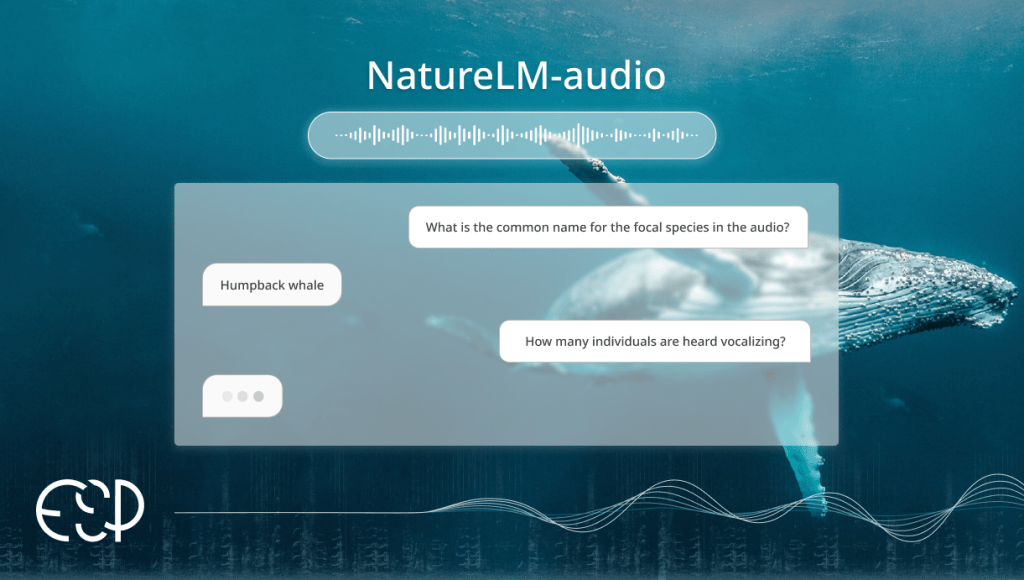
Hands-On with NatureLM-audio: A No-Code Demo
Explore NatureLM-audio, our open-source model for bioacoustics. Try the new demo to analyze animal sounds, identify species, and support research.
-
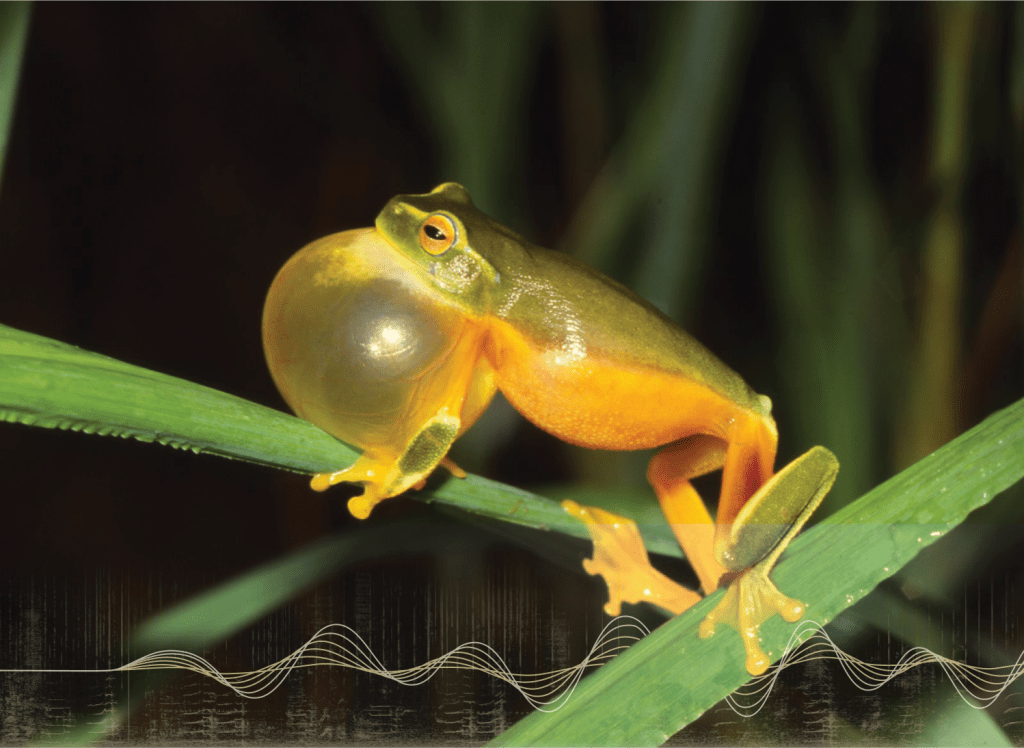
Listening for Frogs at Scale: How FrogID Evaluated NatureLM-Audio on Real-World Data
FrogID, the world’s largest frog-focused citizen science project, tested Earth Species Project’s open-source NatureLM-audio model to help automate the validation of frog vocalizations submitted by the general public. Without fine-tuning, the model excelled at distinguishing frogs from other sounds, potentially saving the team 300+ hours of manual work annually. It also showed strong accuracy on…
-

Decoding Killer Whale Communication From Above and Below
Earth Species Project and Raincoast Conservation Foundation have partnered on a new research project to decode killer whale communication with AI.
-
Our 2024 Annual Report: A New Chapter in Understanding Life on Earth
Explore Earth Species Project’s 2024 breakthroughs in AI and animal communication—and a bold new strategy to help life on Earth thrive.
-

Biodenoising—A Novel Method for Noise Reduction In Animal Vocalizations
Ethologists and bioacousticians are constantly battling noise, from the sound of wind or rain or even the animals’ own movements, drowning out the vocalizations they’re trying to analyze. We introduce a new method, Biodenoising, to address these challenges by denoising animal vocalizations without requiring clean data.
-
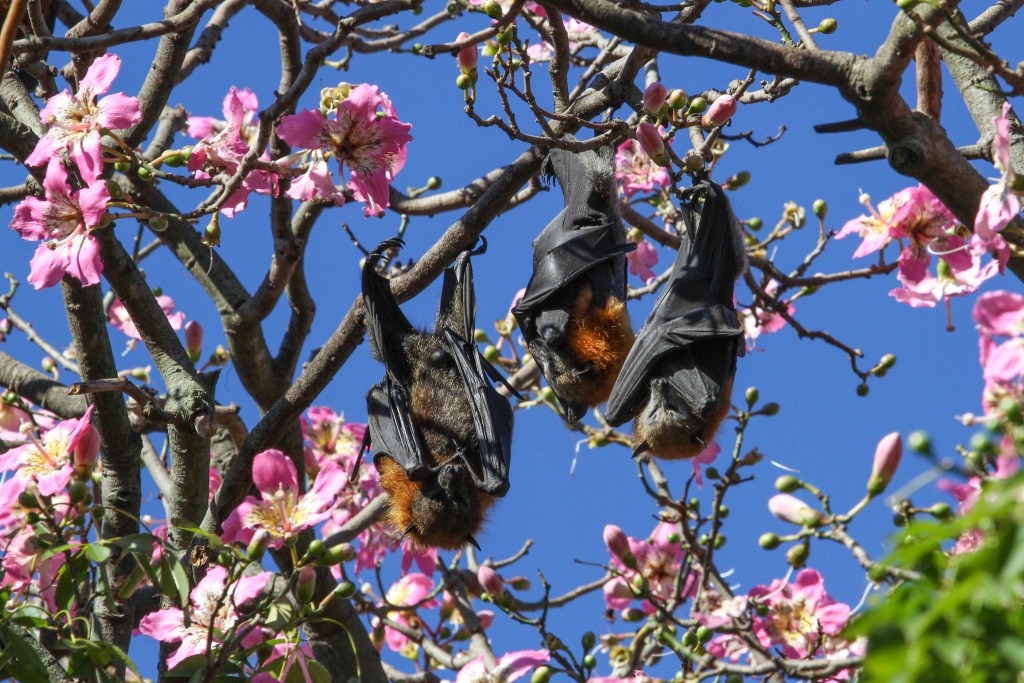
Introducing NatureLM-audio: An Audio-Language Foundation Model for Bioacoustics
NatureLM-audio analyzes complex animal vocalizations across thousands of species with simple, natural language prompts. With state-of-the-art performance on novel benchmarks, it tackles bioacoustics tasks like species classification, life-stage prediction, and even audio captioning, opening up powerful new possibilities for animal communication research.
-

Earth Species Project Secures $17M in Grants to Apply Frontier AI To Decoding Animal Communication
Reid Hoffman and Waverley Street Foundation grants will drive significant AI-fueled animal communication breakthroughs and catalyze a deeper connection to the natural world