
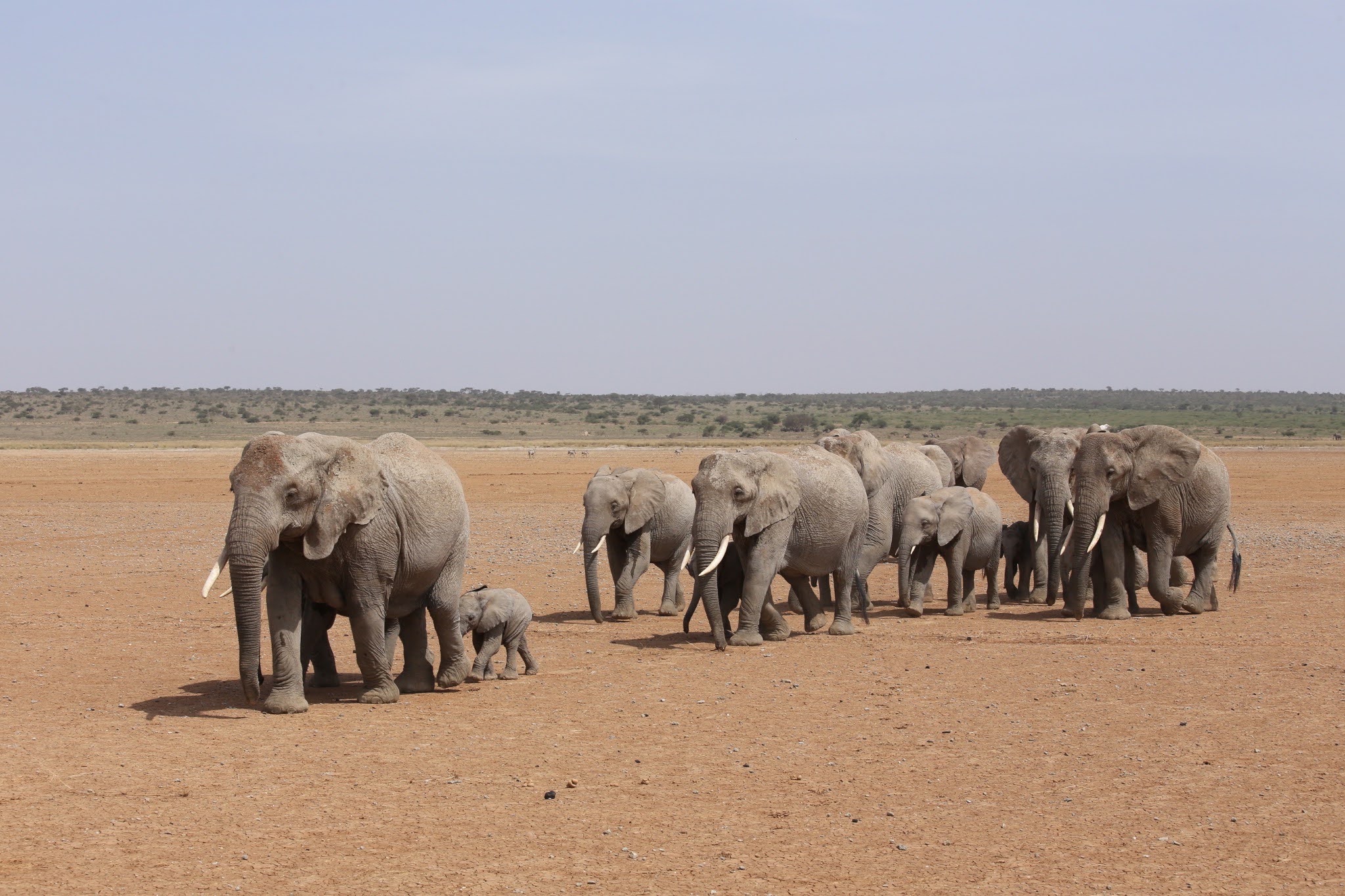
Image 1. A matriarch leads her family across the dry lake bed in Amboseli, Kenya. Such a movement is typically preceded by single and chorused Let’s go and Cadenced rumbles as individuals initiate and negotiate a plan of action. Image Credit: ElephantVoices.
Key Takeaways
- Around 60% of elephant rumbles occur in overlapping choruses, yet these multi-caller exchanges have been far less studied than isolated calls.
- In a new study published in Scientific Reports and authored in collaboration with ElephantVoices, we analyzed elephant choruses as they naturally occur, without needing to separate each call.
- We could predict broad behavioral context from the choruses much better than chance.
- We also identified vocal convergence during some coordinated interactions, with some rumbles becoming progressively more acoustically similar as an exchange unfolded.
- Elephants face habitat loss and human-wildlife conflict across their range. Understanding how elephants communicate, make decisions, and coordinate their movements could help protect key habitats and corridors, ease human-elephant conflict, and support people and elephants living alongside one another.
The Challenge of Studying Elephant Choruses
In many social contexts, including when elephants greet each other after time apart, several animals may rumble at once. Some of those low-frequency, overlapping sounds even extend into the infrasonic range below human hearing. Roughly 60% of elephant rumbles occur inside choruses of two or more voices. Yet these exchanges have received far less scientific attention than isolated calls because they are difficult to analyze. That means a large part of elephants’ natural communication has not been studied.
Instead of trying to pull each individual voice apart, we wanted to know whether we could predict behavior from choruses as a whole.
In a new study published in Scientific Reports, working with ElephantVoices and Amboseli Trust for Elephants, we used machine learning to extract behavioral information directly from complex, overlapping elephant choruses.
Listening to the Whole Chorus
We analyzed 903 rumbles from adult females recorded between 1986 and 2022. The recordings come from one of the most closely studied elephant populations in the world. Since the 1970s, researchers from the Amboseli Elephant Research Project have followed these families across generations, recognizing individuals by features such as the shape and notches of their ears. That long-term knowledge meant the recordings made by the ElephantVoices team came with detailed observations of who was calling, who was nearby, and what the elephants were doing at the time.
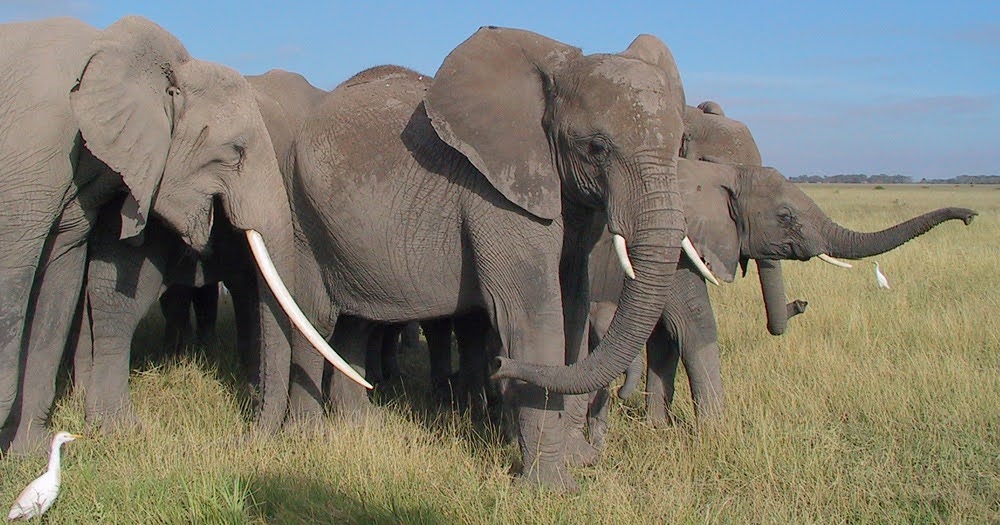
Those observations gave us a way to ask whether the chorus itself contained clues about what the elephants were doing. We focused on six situations in which elephants commonly rumble:
- Contact rumbles – used to re-establish contact with separated family members
- Let’s-Go rumbles – associated with the initiation of group movement
- Cadenced rumbles – back-and-forth exchanges during calm feeding, resting, or moving slowly, hypothesized to function in consensus building for a plan of action
- Coo rumbles – given by adolescent or adult female in the context of greeting, touching,
- suckling, comfort-suckling, reassuring, or comforting an infant
- Little-Greetings – given between closely bonded members of a family when one elephant approaches another
- Full Greetings – used when family members reunite after a period of separation
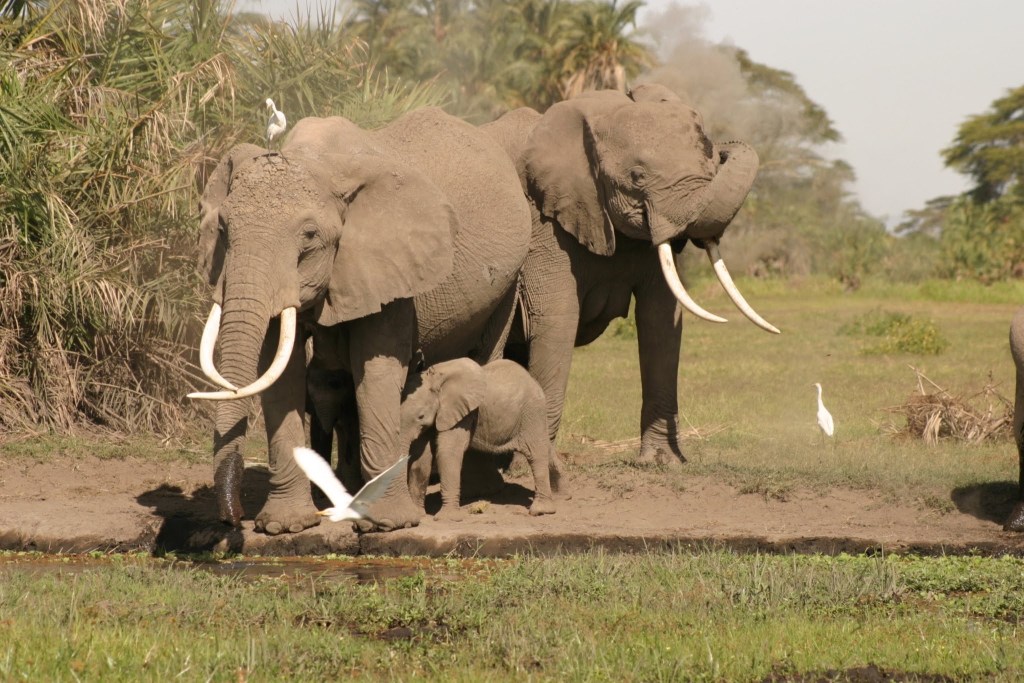
The core of our study was based on recordings of one elephant family led by the matriarch, Echo, who was made famous through several BBC documentaries. The family was composed of 27 individuals, everyone given a name beginning with the letter E: Enid, Erin, Eudora, Ella, to name a few. We also had recordings from 39 other elephant families enabling us to compare the voices of Echo’s family with those of other families.
What Can We Learn From an Elephant Chorus?
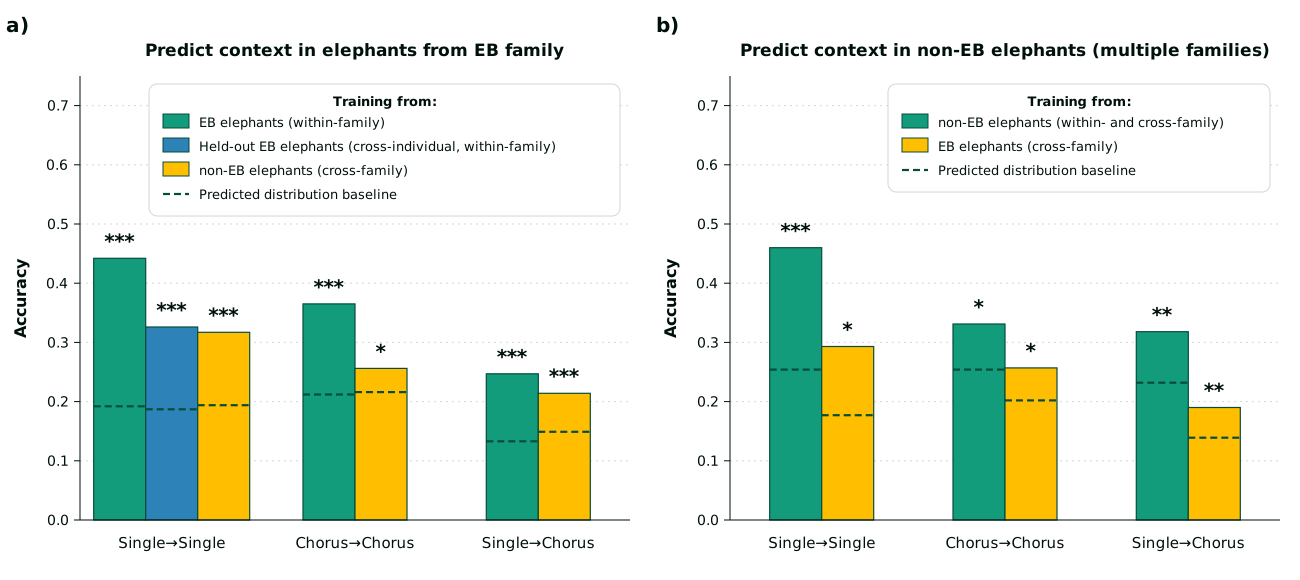
Given only the raw chorus, our models could predict broad behavioral context above chance, (e.g. greeting family members when they reunite, maintaining contact when elephants were separated, and comforting and reassuring calves), and exchanges associated with coordinating movement. The choruses carried multiple layers of information, including what the elephants were doing. This shows that overlapping rumbles are not a random collection of individual calls, but organized and coordinated signals that encode meaningful information across the group.
Elephants “Get in Tune” During Some Interactions
Studying these overlapping exchanges also revealed that during some social interactions, elephants’ rumbles became progressively more acoustically similar as the exchange unfolded. This is known as vocal convergence.
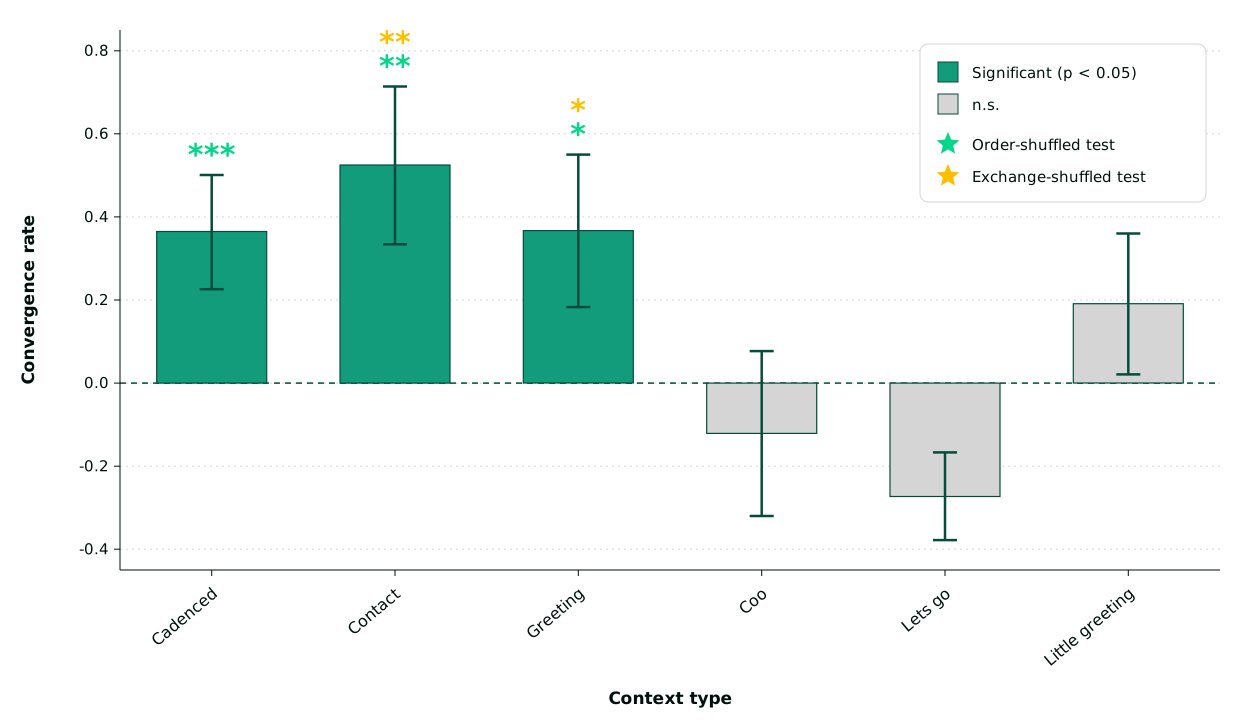
We found convergence in three of the six contexts studied: Greeting rumbles, Contact rumbles, and Cadenced rumbles. Contact rumbles and cadenced rumbles are associated with logistical coordination, raising the possibility that vocal convergence may play a role in helping elephant families build, or agree on, a plan of action. In other words, elephants appear to “get in tune” when coordinating.
Convergence also appeared in greetings, when family members reunite, suggesting the pattern isn’t limited to logistical contexts. Interestingly, greetings often transition into a bout of cadenced calling as the reunited elephants appear to coalesce on the next activity.
Exactly what this means to elephants remains an open question. The study doesn’t demonstrate that convergence reflects coordination. Future experimental research will be needed to understand its function. What it does reveal is another potentially important source of information – how calls change in relation to one another as an exchange unfolds.
A New Way to Listen
For decades, studying animal communication has often meant isolating individual calls so they can be measured and compared, but animals often communicate all at once.
While previous research has predicted behavioral context from multi-caller recordings in sperm whales and orcas, this is the first time researchers were able to do this from elephant choruses. Rather than treating overlap as something that has to be removed before analysis can begin, we began asking what information might exist within the overlap itself.
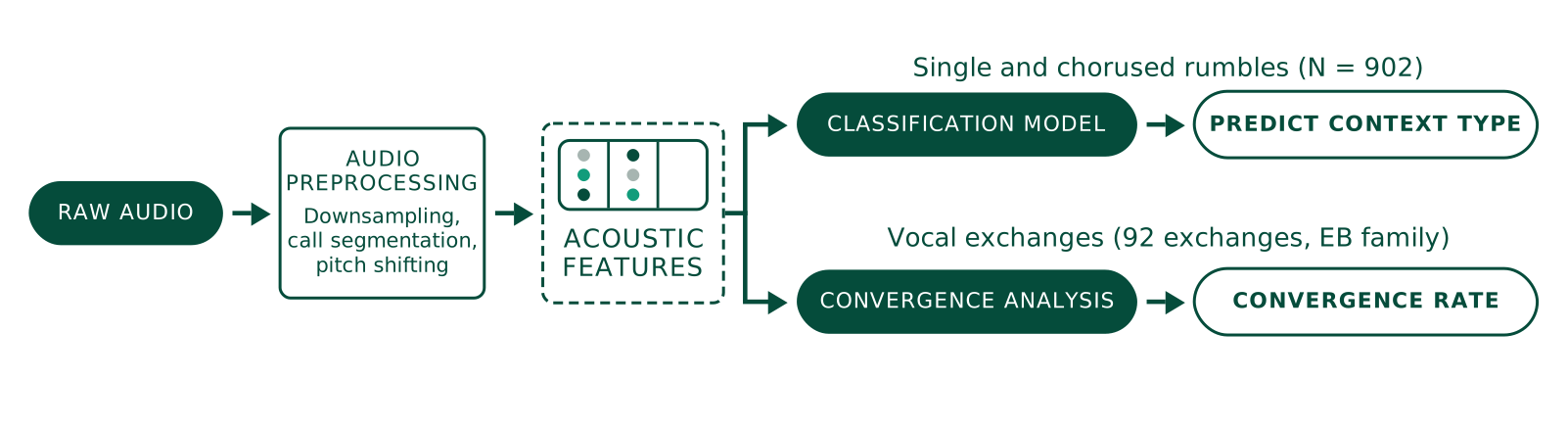
Studying the whole chorus enabled us to study elephant communication as it naturally occurs and provide new insights that were previously beyond the reach of traditional analytical methods. This demonstrates how machine learning can help the research community tackle increasingly complex questions about animal communication in the wild.
How These Could Findings Support Future Conservation
In Amboseli, researchers can usually see the elephants they’re listening to. However, in many of the landscapes where elephants live, that isn’t possible. Dense vegetation, enormous ranges, and the practical challenges of following wild elephants mean researchers cannot always directly observe what animals are doing.
That’s where passive acoustic monitoring can help. Networks of acoustic sensors can listen for elephants across a landscape, generating recordings over long periods of time. Being able to infer behavioral context from those recordings could expand what scientists can learn from this data. For instance, it could help identify important habitats and movement corridors, better understand how elephants use shared landscapes, and inform approaches to human-elephant coexistence.